

Customers don't move in a straight line. Your visuals shouldn't either.
Most campaigns are planned like a funnel: someone sees you, considers you, then buys. Real customers don't work that way. They see you on TikTok and scroll past, hear your name from a friend, check your Instagram, and buy three weeks later from an email.
A visual campaign system plans for all of it.
One brand at the center.
Three planes around it.
→ Every engagement starts with the same question: What does this brand need people to feel before they read a single word? From there, we build backward, strategy first, production second, so the photography you end up with is doing a job, not just filling a feed.
Customers can enter at any plane and move in any direction. Your visuals have to hold up at every one.
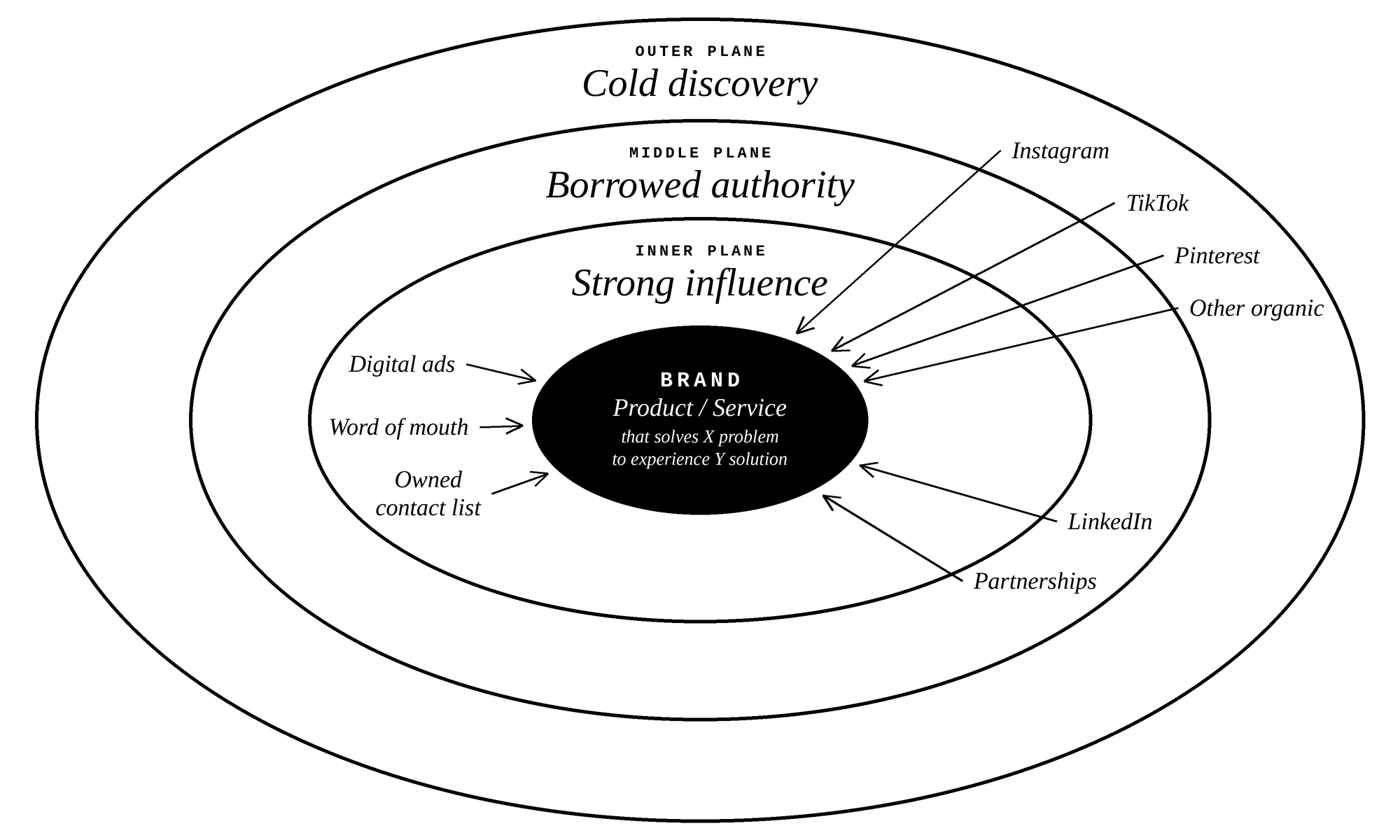
What each plane asks of your visuals:
Cold discovery
→Strangers decide in a second. Visuals here have to stop the scroll and say who you are before a caption does.
Borrowed authority
→Creators, partners and press lend you their trust. Visuals here have to hold up next to someone else's name.
Strong influence
→People who already know you are deciding. Visuals here have to feel like the brand they met earlier, only closer.
One system, not one shoot
A single shoot gives you a month of content. A system gives you one visual language that carries across every plane, so someone on TikTok, a reader of a press feature and a subscriber on your email list all recognize the same brand.
-
Before anything is shot, we look at who your customers are and how they actually find you: which platforms, which people, which moments. That map decides what gets made.
-
Strategy comes first. From the entry points we found, we decide what each one needs to see, then build the creative direction, shot list and production plan around it.
-
One production built for every plane. You receive a finished library of assets made for the places your customers meet you.